
The world is globalized again
It is a lesson that in the United States. We need to learn again and again....

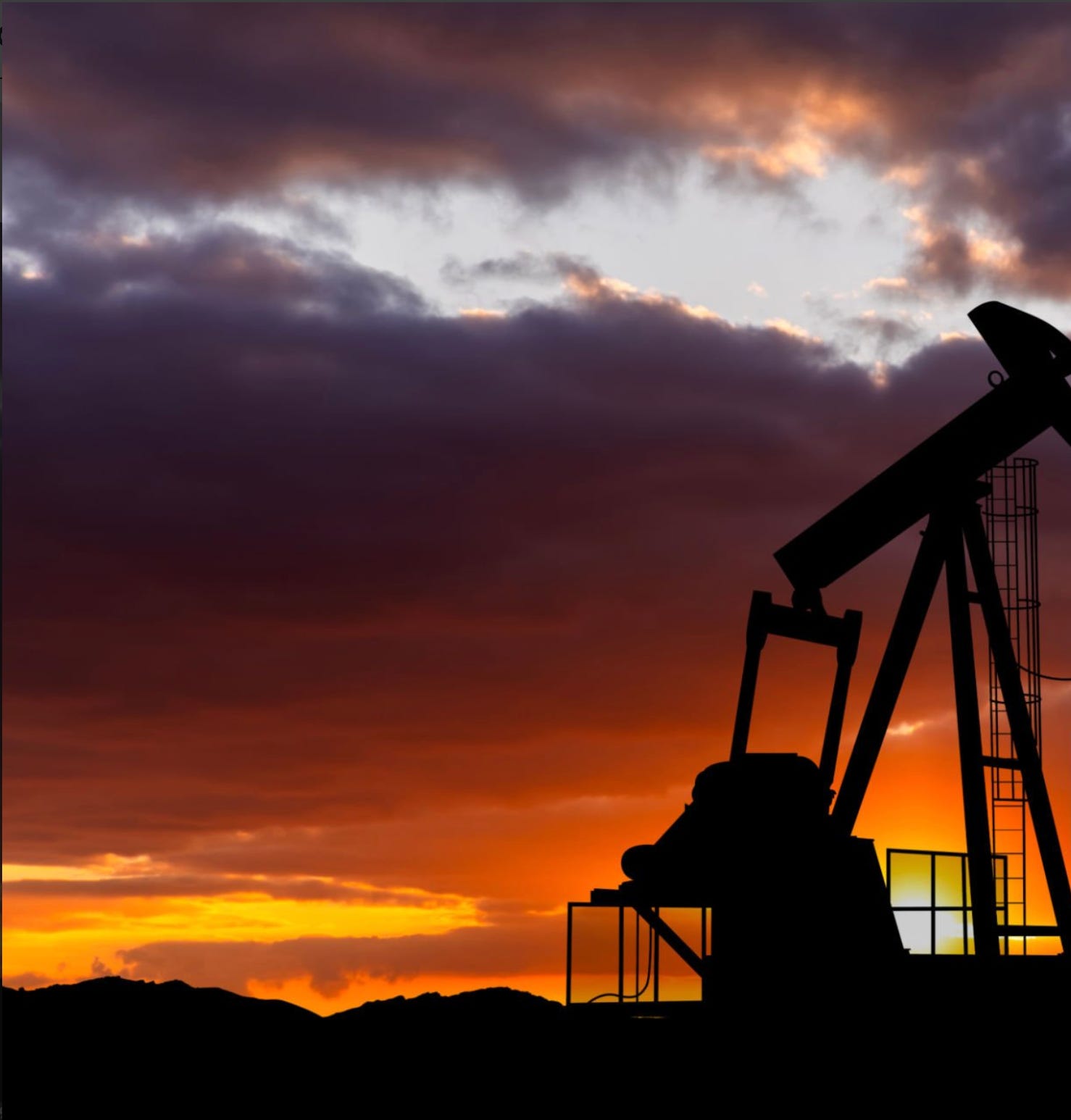
The recent war with Iran, though it is called something else by the dictator in charge, is a reminder that we live in a globalized world, whether we like it or not. This is because energy flows easily between nations unless, as a political unit, we decide to nationalize it. This, the United States is not willing to do, so the alternative is to have private companies sell to the highest bidder, whomever the nationality might be.
The problem is that while we have enough oil, a great deal of it is in a rather marginal place with only a very small amount of profit: the great expenses of the Texas oil fields are fading into the distance. Whether we like it or not, energy is a globalized commodity, and with oil, the best oil fields are not inside the United States. However, the infrastructure for an oil-based economy is largely completed and needs only the maintenance, which is a small part of the total cost. This means that the holders of the fossil fuel-based economy want to milk it for as long as possible, and then longer still.
The trick is that they have managed for about 70 years to avoid paying the cost of the fossil fuel-based economy, which is called “climate change.” Every time you buy a cup of coffee, there is a tax from the fossil fuel-based economy on the cost of the cup. You pay for it because the regions that grow arabica beans are getting fewer because of the effects of climate change. But the people who created value do not have to pay the cost. If the fossil fuel-based economy had to pay for the effects of burning the fuel, it would not be profitable any longer. Which is why they have lawyers to fight any sort of distribution of wealth. The old expression goes he who robs Peter to pay Paul can count on the political support of Paul.
This is why we must ship from a fossil fuel-based economy to an electrical economy. You're burning up in the fossil fuel-based economy, but many of you have made the calculation that you will be dead before it really comes to that, so why bother? Texting the future to pay off the debts of the present is a feature of economics. Unfortunately, the cost is not computed very well because at a certain point it becomes unsustainable: the tax on the future is far above the value in the present. There is an economic formula for this, but the effect is known from other things that ordinary people can feel even though they cannot calculate.
The war with Iran shows that the oil-producing nations want to control the bottleneck of fossil fuel production, and since their lives depend on it, they will fight to the bitter end to keep those bottlenecks under their control rather than anyone else's.
The old expression is that the best time to move to an electrical value economy is 20 years ago. The next best time is now: we need to re-engineer the global economy to be based on electrical value rather than fossil fuel value. This is because the fossil fuel-based economy does not capture all of the costs that it produces. We have known this since the late 1950s in back-of-the-envelope calculations, and the number has grown sharper with each passing decade.
There are numerous aspects of the economy that need to be changed: one of them is that the car-centric model of development is no longer feasible. This is because there is a difference between high-energy, electrical batteries and lower-density electrical batteries. In this model, trains become more effective because they can use lower-density batteries at scale, whereas cars need higher-density batteries. There are many changes, but they lead to a second-level effect: we need labor here to do these changes, and that means that the labor force needs to be more adequately paid. This does not sit well with the wealthy, who base their whole existence on reducing the labor force cost of everything. The wealthy know that this is an existential threat to their dominance, and they will fight tooth and nail to keep the current system.
-
This is not the first time that this has happened. In fact, it has happened twice in the history of the United States: the first was when the wind and water-based economy changed to a coal-based economy, and the second was when the coal-based economy changed to an oil-based economy.
In the 1700s, there were two ways of getting energy, other than buying manpower: using water-based force of gravity, which is most present in streams and rivers, which is how the mill towns were created, and by using the Coriolis effect to drive sales by wind. But then the power of burning wood, and then burning coal, became profitable. This led to an explosion in the area of transportation and manufacturing: the train, the wireless, and the intense heat and pressure used to make steel were some of the examples. There was also corruption because holding the bottlenecks in such a way is hugely profitable, especially when you can socialize the building out of it and privatize the profits.
This was the boom of the 1840s through 1890s - one needed to build railroads, telegraphs, and huge furnaces to make the quantities of steel, which were necessary to convert the economy to a coal-based economy. It was also the time of the robber barons, with Wikipedia listing the following:
John Jacob Astor (real estate, fur) – New York
Andrew Carnegie (steel) – Pittsburgh and New York
Jay Cooke (finance) – Philadelphia
Charles Crocker (railroads) – California
Edward L. Doheny (oil) – California
Daniel Drew (finance) – New York
James Buchanan Duke (tobacco, electric power) – Durham, North Carolina
James Fisk (finance) – New York
Henry Morrison Flagler (Standard Oil, railroads) – New York and Florida
Henry Clay Frick (steel) – Pittsburgh and New York
John Warne Gates (barbed wire, oil) – Texas
Jay Gould (railroads) – New York
E. H. Harriman (railroads) – New York
James J. Hill (fuel, coal, steamboats, railroads) – St Paul, Minnesota
Collis Potter Huntington (railroads) – California, Virginia, West Virginia
Andrew Mellon (finance, oil) – Pittsburgh
J. P. Morgan (finance, industrial consolidation) – New York
John D. Rockefeller (Standard Oil) – Cleveland, Ohio
Henry Huttleston Rogers (Standard Oil, copper), New York
Thomas Fortune Ryan (public transit, tobacco) – New York
Russell Sage (finance, railroads) – New York
Charles M. Schwab (steel) – Pittsburgh and New York
Leland Stanford (railroads) – California
Cornelius Vanderbilt (maritime, railroads) – New York
Peter Arrell Browne Widener (mass transit) – Philadelphia, Pennsylvania
Charles Yerkes (street railroads) – Chicago
This list can be made longer, but it shows the concentration of wealth by making energy transportable at the continental level. It takes a stride towards making the economy global, but there is a problem with coal, which is solid and irregular in form, and does not have the energy density to be transported easily by ships. The only way for cool to make the world global is by making the military have a much longer reach than before. This crumbled the last of the wind and wood empires, such as Spain, in favor of new empires, which were their military on coal. This means that the United Kingdom and France could make the change because they had sufficient coal, and the United States was based on coal from the 1860s onwards.
The First World War was the conflict where coal was the dominant factor, and B problems with coal as a globalizing force became abundantly clear: it did not have the energy density to move an army, and the navy was tremendously expensive to the point where the United Kingdom changed to an oil-based economy for its huge battleships. The transition from World War I to World War II was the shift from a coal-based infrastructure to an oil-based one. This is why the Axis powers wanted to gain control of their own oil-based resource, because without such capacity, their energy density was too low to control a global empire. The bet of the Second World War was whether the Axis powers could control an oil economy, which would make for a short war, or whether the Allied powers, all of whom had an oil-based profit center, would hold on for the longer war. When looking at it from this perspective, it is clear that the Axis powers had a very small chance of accomplishing their ends, and by the end of 1941, it was almost 0.
All that was left to do was the fighting and dying. This is because the Axis powers are not going to go down without a fight.
-
This leads us to the second change in energy supply: from coal to oil. From the 1930s, oil was the secondary source of energy to the primary source of energy. Even things which are not thought of as oil-dependent are, in fact, the transformation of technology, which is the savings of oil that the old system would require; instead, it is transformed to moving bits rather than moving atoms. Bill Gates is a multi-billionaire because he saved the necessity of moving atoms and instead moved bits.
Big Tech is based on oil. I say this as someone whose career was in Big Tech.
It also globalized the supply of energy: oil is liquid and can be transported on large ships because it is of higher energy density than coal. This means that the highest bidder for energy gets the energy, rather than a nationalist dystopia. The entire means of oil is to globalize the market for energy. Note that this is not the case for renewable energy sources because the loss over time is too large to ship energy from place to place.
The problem with the oil based economy in the present is that it needs to allow carbon dioxide to escape into the atmosphere. This blanket of carbon dioxide and methane produces a shroud of heat that is not captured in the legal framework, because the people who benefit from it do not want to have their losses privatized. Socialize costs, privatize profits. When you are old, it is far easier to get your hands into the profit center, and when you are young, you are dumped into a situation where you are socializing costs for your entire life.
-
When one captures the cost of the fossil fuel-based economy, it does not work: it is already making less than it produces, and the only way it can continue is by chopping off the infrastructure and socializing the losses. Our war with Iran shows that the centers of the fossil fuel-based economy will be in the hands of the oil-driven economies because they need to have a surplus from the production of fossil fuels. Now is the time to change over to an electrical value, economy, and off of the fossil fuel economy.
Look out your window and see the fossil fuel cars, and realize that each one of them is a weakness in the United States economy, since it does not produce much high-value fossil fuels, only low-value fossil fuels. The problem with the fossil fuel-based economy is that it needs to be a dictatorship, and squash the millions of people who do not benefit from the fossil fuel economy. Many of the requirements are noxious: women who become pregnant must carry to term because there is no reason to do so from an economic standpoint, and the entire social system needs to produce babies to run the fossil fuel economy. At this point, the fossil fuel-based economy is a maw that consumes the very living flesh of the subjects.